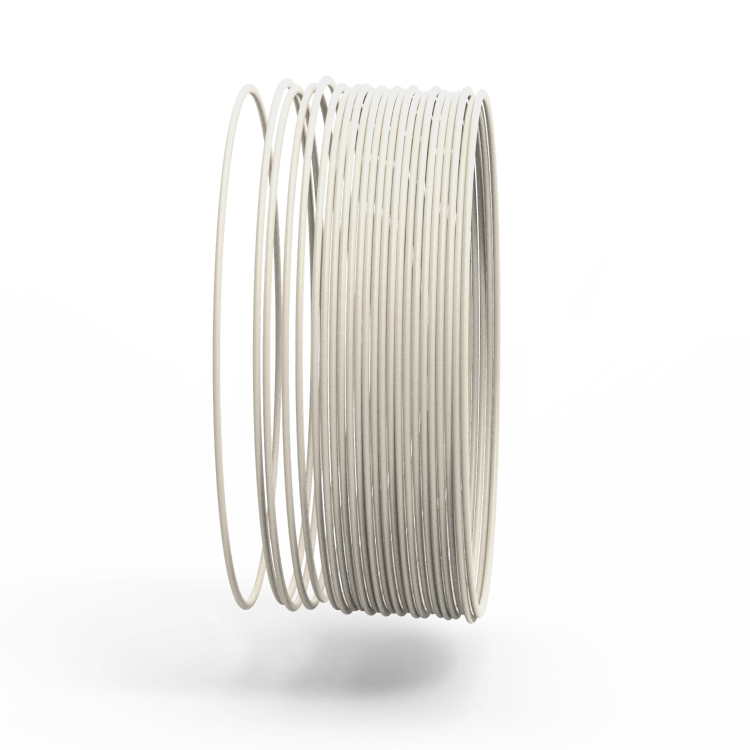
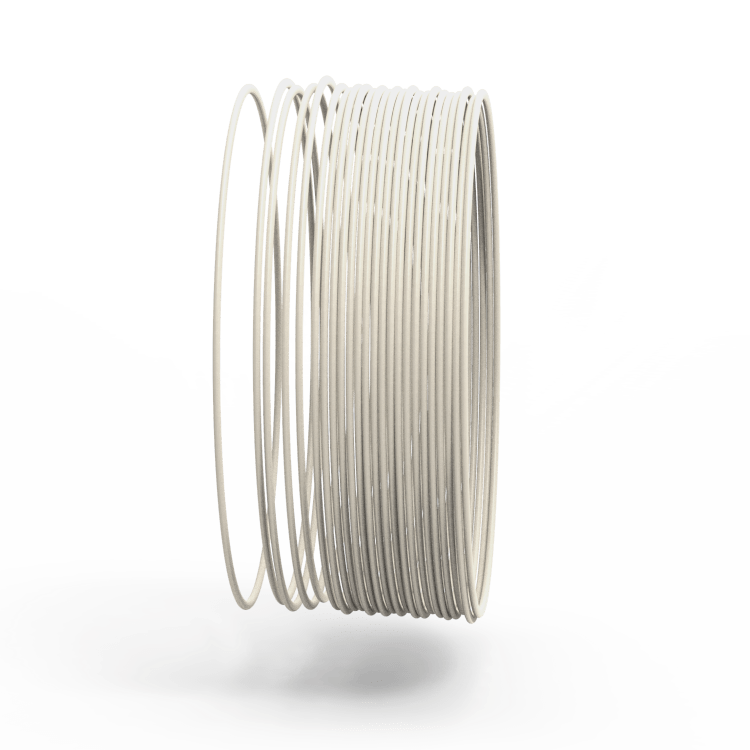
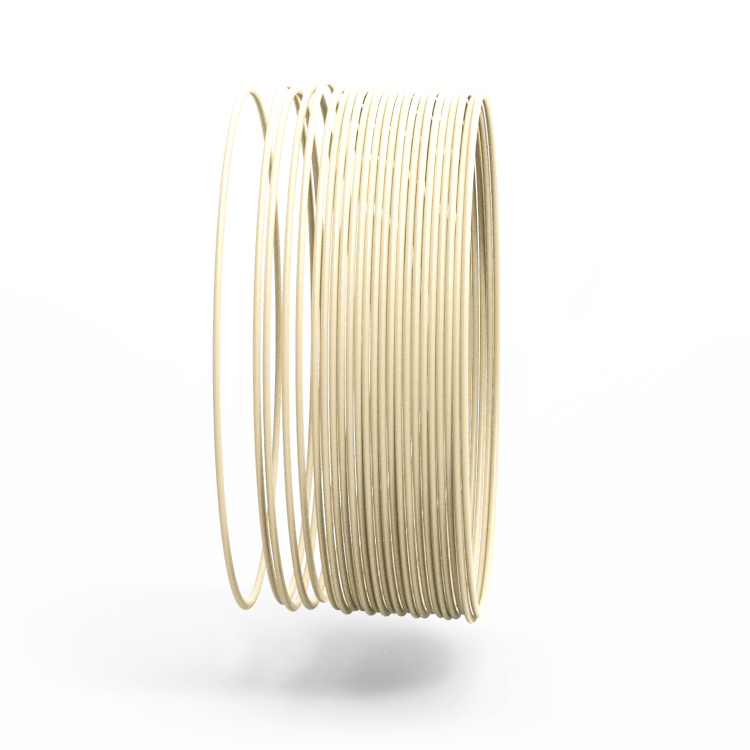
These properties give this filament a high degree of versatility. ABS FOOD has been demonstrated to be compatible with all commercial 3D printers utilising FDM/FFF technology. A further significant benefit inherent in the utilisation of ABS FOOD is the post-print output, which is conducive to sanding. In order to achieve the most favourable outcomes in printing processes, it is imperative to utilise a heated printing surface, given the inherent properties of ABS filament, which is known to exhibit non-perfect adhesion properties when employed in printing applications. ABS is characterised by its resistance to heat, yet it is also susceptible to damage from ultraviolet radiation. It is imperative to ensure that ABS is not exposed to direct sunlight. ABS FOOD is certified in accordance with Regulation (EC) No. 1935/2004 and (EC) No. 2023/2006. Weight: 1.00 kg.
| SUGGESTED PRINT SETS (1) |
| Suggested print sets | unit | value | test method |
| extruder temp | C° | 235-250 | internal |
| plate temp | C° | 90 | internal |
| min. nozzle diameter | mm | 0,2 | internal |
| fan | % | 0-70 | internal |
| print speed | mm/1° | 30-60 | internal |
| PROPERTY |
| Physical | | | |
| Specific gravity | g/cm3 | 1.05 | ISO 1183 |
| Mechanical | | | |
| Tensile strength | MPa | 47 | ISO 527 |
| Tensile elongation | % | 30 | ISO 527 |
| Charpy impact (23°C) | kJ/m2 | 21 | ISO 179 |
| Flexural strength | MPa | 76 | ISO 178 |
| Thermal | | | |
| HDT | °C | 83 | ISO 75 A |
| Vicat softening temp. | °C | 104 | ISO 306 |