Spare parts stock: 3D print them only when needed
How a company stops keeping spare parts on shelves: which parts can be 3D printed, how the file is protected and how a digital warehouse really works.
A company stops keeping spare parts in stock when it stores them as protected files and has them 3D printed only when needed, at its own sites or close to the customer. It works for many polymer components, such as knobs, brackets, lids and gears, and it removes the cost of idle stock: about a quarter of its value every year.
In short
- Idle stock costs about a quarter of its value every year, in space, tied-up capital and parts that age.
- Many polymer spare parts can be FDM 3D printed when the order arrives, instead of being made in advance.
- The real risk is the file: if it travels, it gets copied, and on different printers it gives different parts.
- With Vault the file stays yours, the part comes out the same on every authorised printer and every copy has its Proof of Print.
- It starts with an assessment: we study each part together with you.
Why does spare-parts stock cost so much?
A spare part on a shelf costs money even when nobody asks for it. It takes up space, ties up the capital spent making it, and it ages: plastics yellow, models change, part numbers are discontinued. All together, idle stock costs about a quarter of its value every year.
The bill is heaviest on slow movers, the parts needed a few times a year but kept for years. For products covered by EU repairability rules the years are fixed: up to ten years after the last unit is sold, with delivery within 15 working days. We cover this in our guide to the EU right to repair.
Then there is forecasting. How many parts should you make before the mould is switched off? Too many and they get scrapped. Too few and in a few years a customer waits for a part that no longer exists.
Which spare parts can be 3D printed?
The natural candidates are polymer components that can be made with FDM 3D printing:
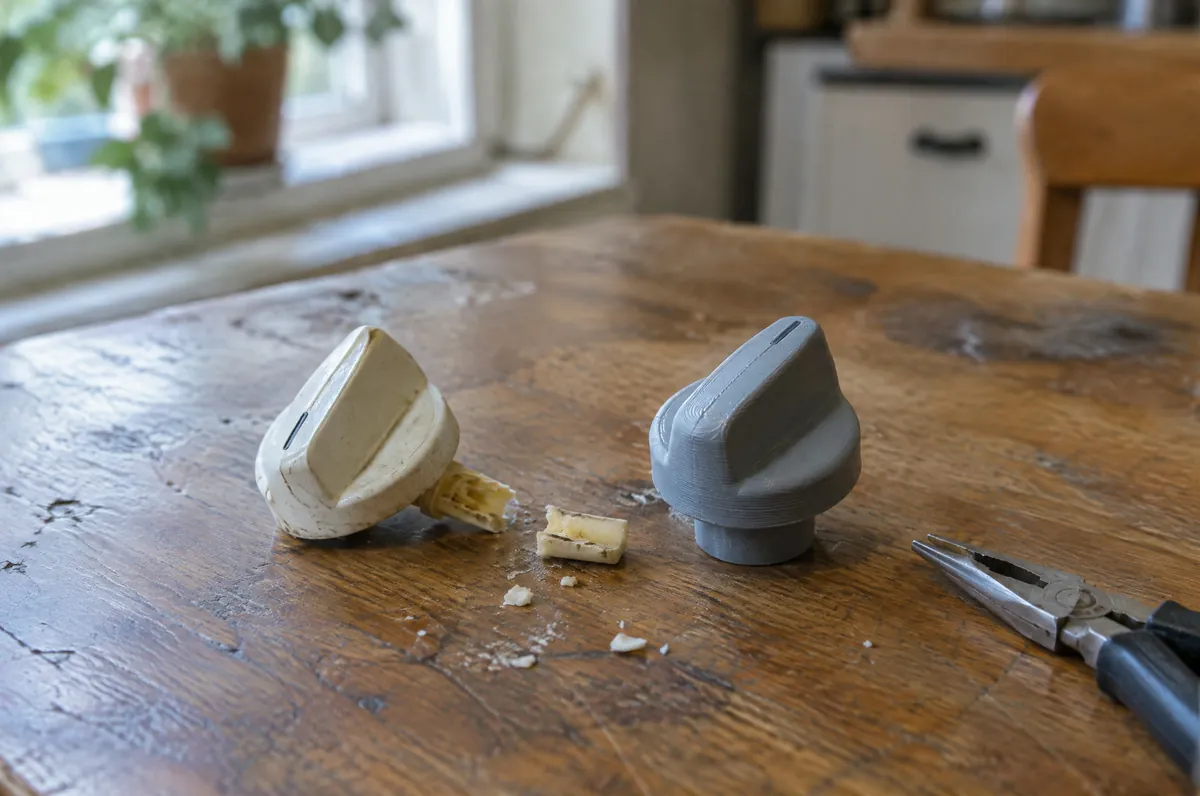
- knobs and handles;
- brackets, supports and hooks;
- lids, caps and small doors;
- gears and parts of small mechanisms;
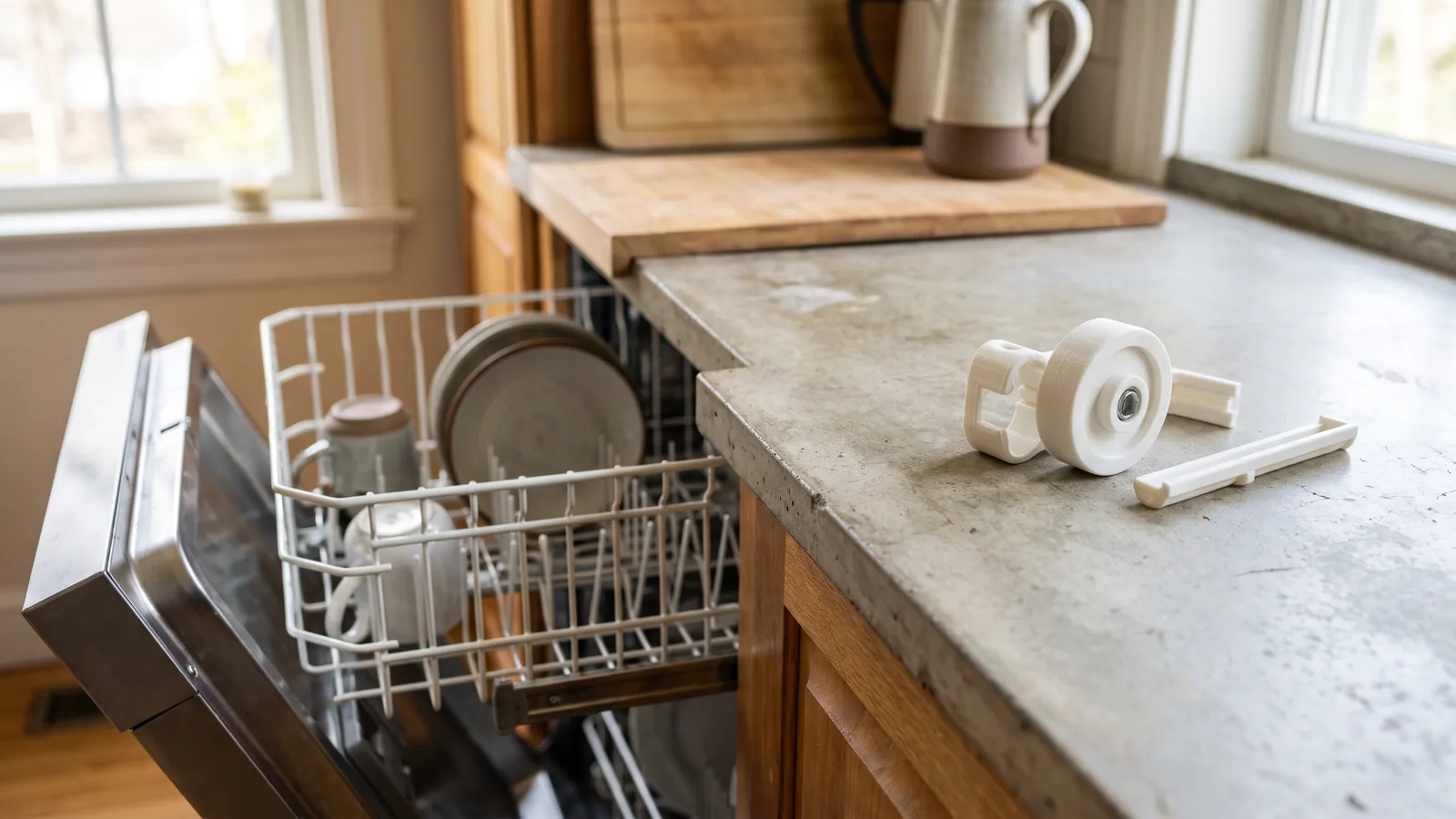
- cutlery baskets, trays, shelves and spacers.
Not every part is suitable. Each spare part has to be assessed for material, shape, loads and use. Metal, electrical and electronic parts are out of scope. That is why with Vault we study each part together with you: material, shape, tests.
The problem of the file that gets copied
Turning a spare part into a file is the easy bit. The hard part comes next.
A file sent to a supplier, a service centre or a reseller can be copied. And a copied file is an original spare part that anyone can make and sell without the company knowing. On top of that, the same file on different printers, with different settings, gives different parts: quality depends on who is in front of the machine.
Traditional digital warehouse services solve part of the problem: they store the files and produce them in a central print farm, and the part then travels. The file is safe, but production stays far from the customer.
How does Vault work?
Vault is the digital spare-parts warehouse of The Genesys, the first distributed factory: blockchain, AI and 3D printing to make objects close to the people who need them, from a protected file. It is The Genesys's industrial product.
Companies keep spare parts as protected files instead of on shelves. When they need one, or when a customer orders one, the part is printed in a few hours, at their own sites or through the protected network.
- The file stays yours. It reaches only the printers you authorise, encrypted, and it cannot be downloaded, not even by whoever prints it. The protection system is patented (IT 102024000025047 · PCT/IB2025/061384).
- The part always comes out the same. Printing is prepared once, and locked, for every authorised printer. On site you just pick it and start it.
- You decide the copies. How many (in total, per month or unlimited), where and by whom, with links and codes that can expire. Every revision has its own code, and nobody prints more than allowed.
- At your sites or close to the customer. If you allow it, the part is printed by a Node or a Grid point in the network near whoever needs it: no shipping from a central warehouse.
- Every copy has its certificate. The Proof of Print, on blockchain, records where, when, on which printer and in which material the part was made. It is very close to a digital product passport.
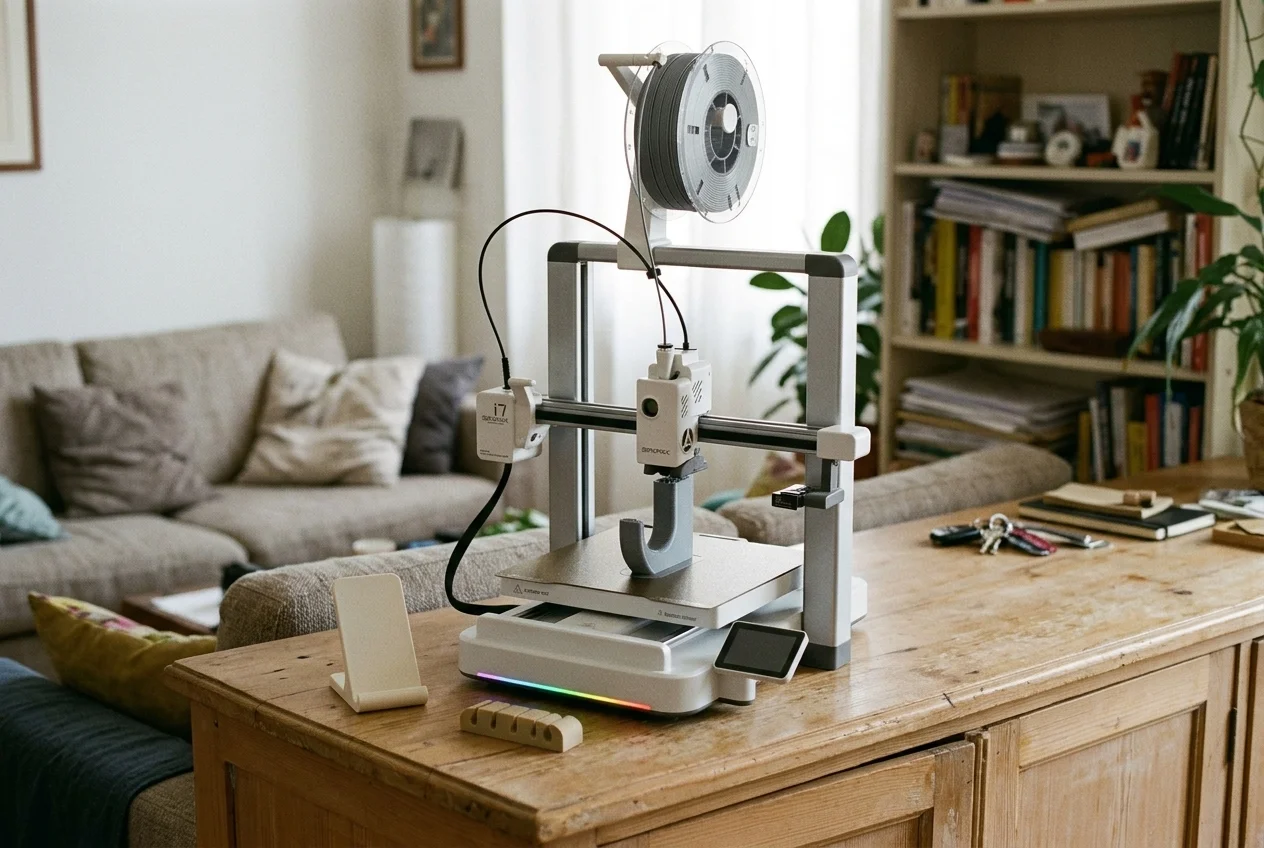
- The printers you already have. Hermes connects to many FDM printers on the market; for companies there is also a ready-to-use professional printer.
Already have a digital warehouse? You still benefit: with The Genesys you add the patented protection system and a printing network that lets you run production sites in different places, with the same quality standard and the same protection you would have in-house.
A printer that pays for itself
There is one advantage a traditional warehouse doesn't have. If you want, your printer can print parts for other Vault customers when it is idle. The system works out the printing cost, and so your earnings, automatically, based on part, material and quantity. It is a technology that pays for itself when you put it at the service of the network.
How do you get started?
1. The assessment. In half an hour we show you which spare parts you can move into the Vault and how much warehouse you free up. 2. Choosing the parts. Start with slow movers and discontinued models, where stock weighs most. 3. Studying the part. We study each part with you: material, shape, test prints. 4. Files into the Vault. From then on those parts are printed when needed, and their stock stops growing.
Frequently asked questions
What is a digital spare-parts warehouse?
Which spare parts can be 3D printed?
Is the printed spare part the same every time?
How do you stop the spare-part file from being copied?
Do we need to buy new printers?
Does Vault help with the EU right to repair?
Spare-parts stock, without the shelves
Spare parts as protected files, printed when needed, the same everywhere, with proof for every part.