EU right to repair: spare parts without a warehouse
Directive (EU) 2024/1799: what it asks of manufacturers, how many years spare parts must last, and how to keep them as protected files, printed on demand.
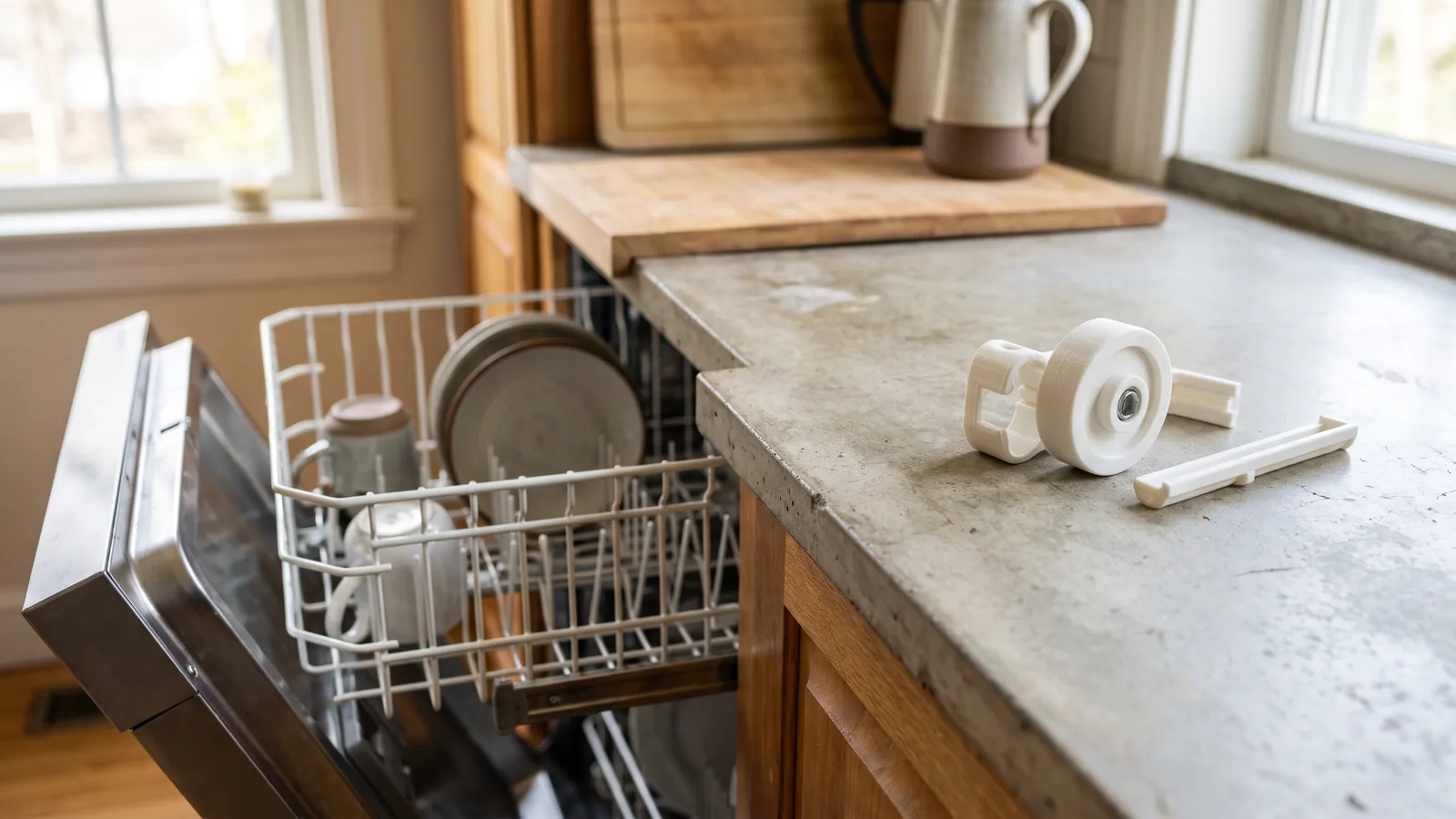
To guarantee spare parts for years without keeping them on shelves, a manufacturer can store them as protected files and 3D print them only when an order comes in. It is the simplest answer to what the European right to repair asks for: parts available for up to ten years after the last unit is sold, delivered within 15 working days, at a price that does not deter repair.
In short
- Directive (EU) 2024/1799 on the right to repair applies from 31 July 2026.
- It requires manufacturers to repair, even after the warranty, products with EU repairability requirements: washing machines, dishwashers, refrigerators, vacuum cleaners, smartphones and more.
- The number of years for spare parts is set by the product regulations: 7 or 10 years, with delivery within 15 working days.
- The directive explicitly names 3D printed spare parts.
- With Vault, polymer spare parts become protected files, printed when needed, and every copy has its Proof of Print.
What does the EU right to repair directive require?
Directive (EU) 2024/1799 was published in the Official Journal of the EU on 10 July 2024. Member States had to apply the new rules from 31 July 2026 (Art. 22).
The core is Article 5. The manufacturer must repair the product when the consumer asks, even after the warranty, free of charge or at a reasonable price and within a reasonable time. Manufacturers that supply spare parts and tools must offer them at a price that does not deter repair. Indicative prices for typical repairs must be public.
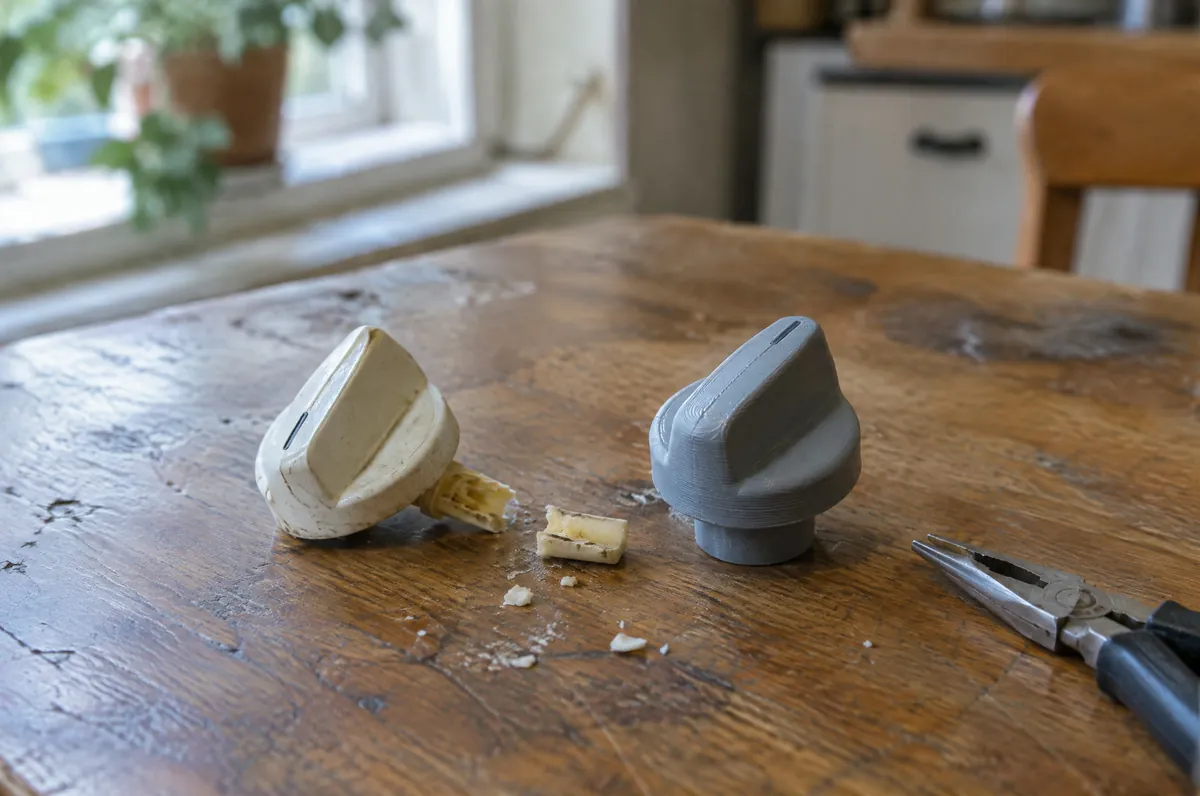
The directive also protects those who repair instead of the manufacturer. The manufacturer cannot obstruct independent repairers, nor the use of original, second-hand, compatible or 3D printed spare parts, as long as they comply with product safety and intellectual property rules (Art. 5(6)). And it cannot refuse a repair just because someone else has already worked on the product (Art. 5(7)).
For consumers, a European online platform to find repairers is on its way: the Commission must launch it by 31 July 2027 (Art. 7).
Which products are covered?
The obligation to repair applies to products with repairability requirements in EU law. Annex II of the directive currently lists ten product groups:
- household washing machines and washer-dryers;
- household dishwashers;
- refrigerating appliances;
- electronic displays;
- welding equipment;
- vacuum cleaners;
- servers and data storage products;
- mobile phones, cordless phones and tablets;
- household tumble dryers;
- goods with batteries for light means of transport, such as e-bikes and e-scooters.
The list is not closed: the Commission updates it as new product rules arrive (Art. 5(9)). If you make or import products in one of these sectors, or one that may join them, you already have a spare-parts problem.
How many years must spare parts be available?
The directive does not set a number of years: it refers to each product's regulation. For large household appliances the obligations have applied since 1 March 2021 and are counted from when the last unit of the model is placed on the market.
| Product | Spare parts and years | Delivery |
|---|---|---|
| Washing machines and washer-dryers | 10 years for all listed parts, from the motor to the door and the detergent dispensers | within 15 working days |
| Dishwashers | 7 years for professional repairers' parts; 10 years for parts consumers can also replace: hinges, seals, spray arms, filters, baskets, lids | within 15 working days |
| Refrigerators | 7 years for thermostats, sensors, handles, hinges, shelves and drawers; 10 years for door gaskets | within 15 working days |
Source: Regulations (EU) 2019/2023, 2019/2022 and 2019/2019, Annex II.
Ten years after the last unit means that for a model sold for four years, parts must be available for fourteen years from launch.
What does it cost to keep spare parts for ten years?
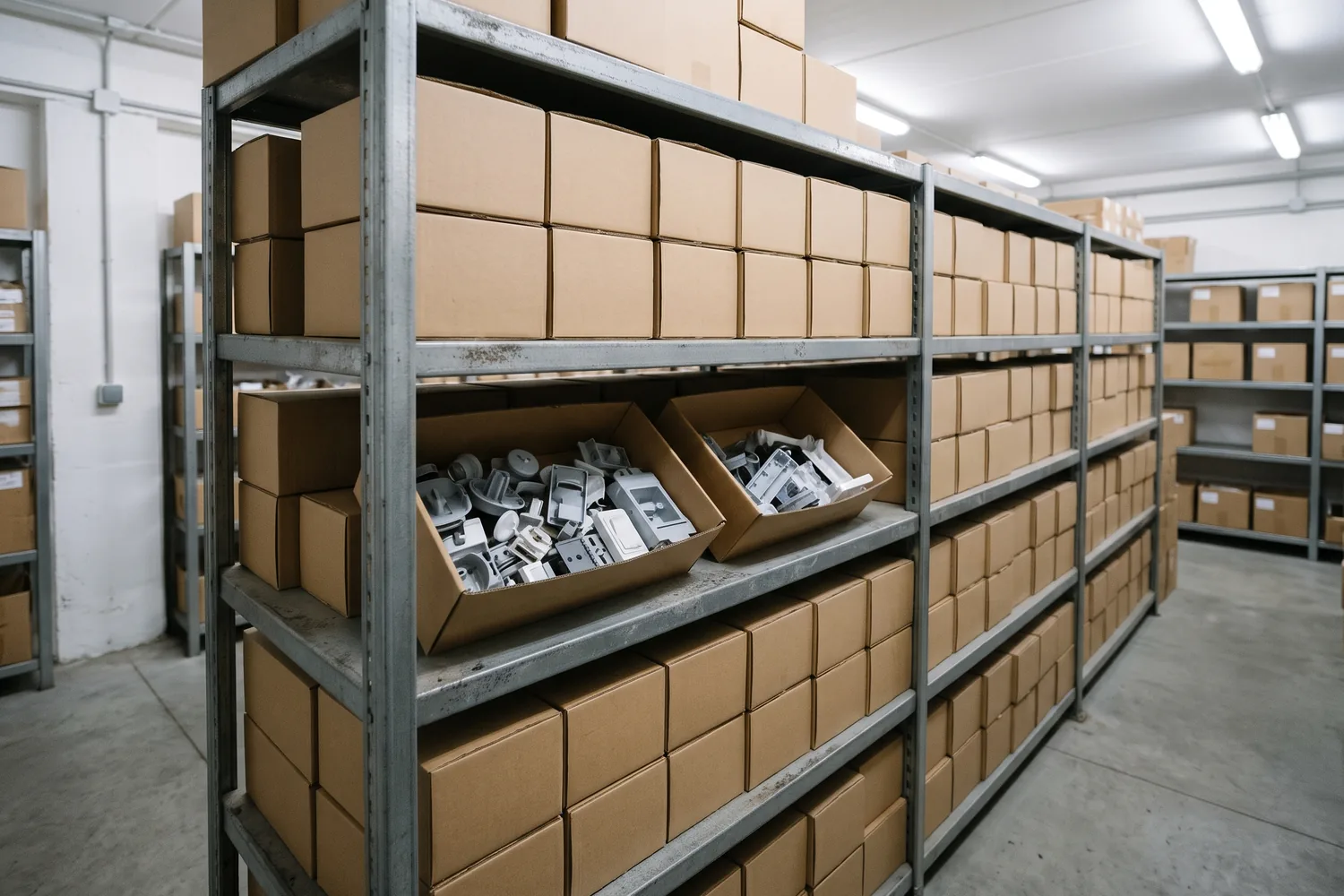
Idle stock costs about a quarter of its value every year, in space, tied-up capital and parts that age. Over ten years, the same shelf costs more than twice what it is worth.
Then there is forecasting. Nobody knows how many dishwasher basket wheels will break in eight years. Make too many and they end up scrapped. Make too few and at some point the part runs out and the 15-day obligation can no longer be met. Meanwhile the mould for the discontinued model sits idle, and restarting it for a few hundred parts makes sense for nobody.
Can a spare part become a file?
Many of the parts the regulations require are polymer components: basket wheels, cutlery baskets, lids, handles, shelves, dispensers, brackets, clips. They are natural candidates for FDM 3D printing. Not every part is suitable: each one has to be assessed for material, shape and use. But for those that are, the warehouse can become an archive of files.
This is where the second problem starts. A file that is sent around gets copied, and a copied file is an original spare part that anyone can make and sell. And the same file, on different printers, gives different parts.
Traditional digital warehouse services store the files and produce them in a central print farm, and the part then travels. The Genesys goes a step further: it protects the file, makes it identical on every printer and has it produced close to whoever needs it.
How does Vault work?
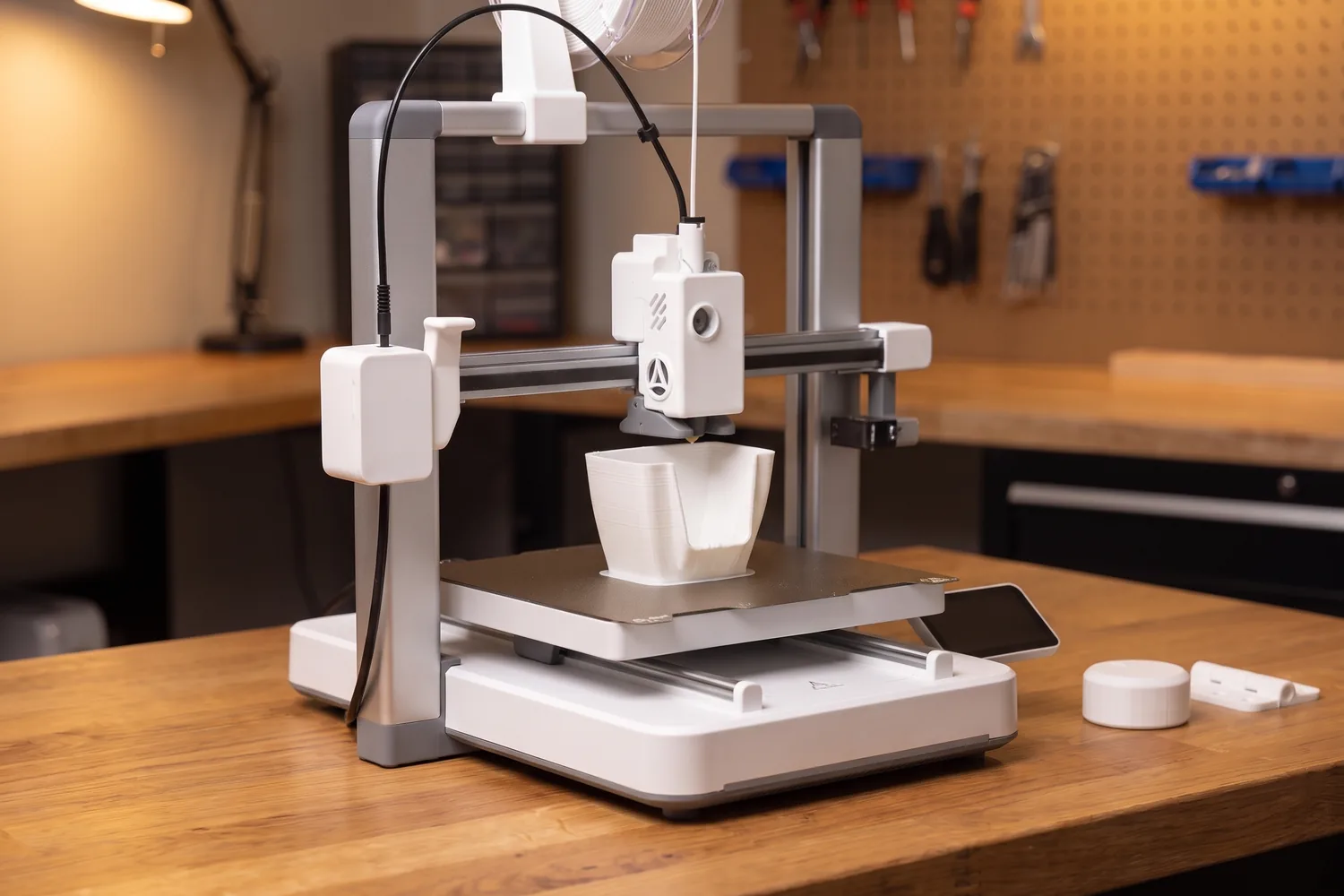
Vault is the digital spare-parts warehouse of The Genesys, the first distributed factory. Companies keep spare parts as protected files instead of on shelves and have them printed only when needed: when they need one, or when a customer orders one.
- The file stays yours. It reaches only the printers you authorise, encrypted, and it cannot be downloaded, not even by whoever prints it. The protection system is patented (IT 102024000025047 · PCT/IB2025/061384).
- The same part, everywhere. Printing is prepared once, for every authorised printer. On site you just pick it and start it: quality does not depend on who is in front of the machine.
- You decide the copies. How many, where and by whom, with expiry dates if you want. Every revision has its own code.
- At your sites or in the protected network. If you allow it, the part is printed by a Node or a Grid point near the customer: no shipping from a central warehouse.
- Proof for every part. Every copy has its Proof of Print on blockchain: where, when, on which printer and in which material. Traceability that is ready for the digital product passport too.
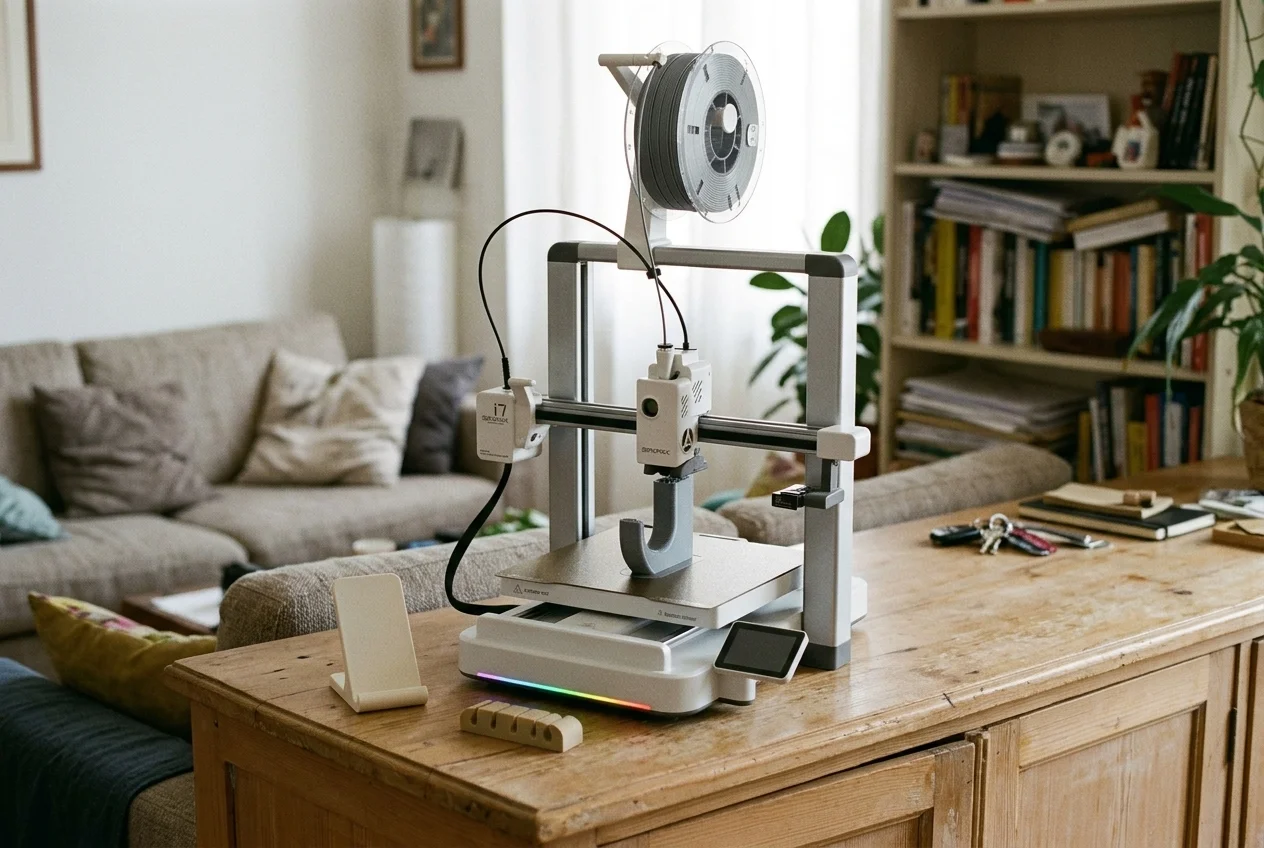
- The printers you already have. Hermes connects to many FDM printers on the market; for companies there is also a ready-to-use professional printer.
There is one more advantage. If you want, your printer can print parts for other Vault customers when it is idle. The system works out the earnings automatically, based on part, material and quantity.
How do you get started?
It starts with an assessment of your spare-parts catalogue. Together we pick the parts that suit 3D printing, beginning with slow movers and discontinued models. We study each part with you: material, shape, tests. Then the files go into the Vault and the stock of those parts stops growing.
Frequently asked questions
When does the EU right to repair apply?
How many years must a manufacturer keep spare parts available?
Does the law require spare parts to be kept in stock?
Can 3D printed spare parts be used?
Which spare parts can be printed with Vault?
How do you prove who made a printed spare part?
Spare parts without a warehouse
The right to repair asks for spare parts for years. Vault keeps them as protected files and has them printed when needed, at your sites or close to the customer, with proof for every part.
This guide is for information only and is not legal advice. For the specific obligations of your product, check with your adviser.